III Honeycomb World. First Story

The doings of a laundress
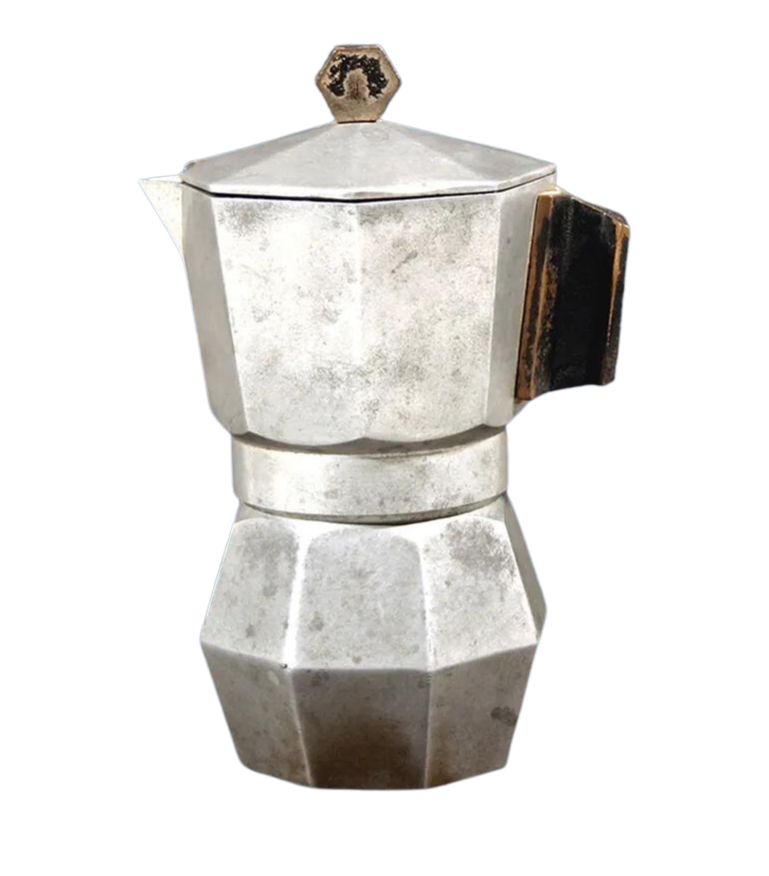
About 100 years ago, Alfonso Bialetti sat in the courtyard of his workshop for the manufacture of aluminum semi-finished products and watched a laundress struggle in the distance. The factory was new – Bialetti had worked in the aluminium industry in France for 10 years and then opened a workshop in his homeland Italy. A workshop for the study, design and creation of finished, ready-to-sell products. Watching the laundress Bialetti noticed her washing machine, where soapy water in a closed container rose up in the machine and cleaned clothes in this way. “Why not use the same process in coffee-making - that would make it much easier,” thought Bialetti.
It took 15 years, and the first working prototype of Moka Express was available and patented. This changed the coffee culture – before that, making good aromatic coffee was complicated, equipment large and cumbersome, and it was mainly made in a cafe. The Moka pot brought good coffee to homes.
The breakthrough was made a while later, namely in the 1950-s, when Renato, the inventor's son, took the lead in the company. When dad had sold 70,000 Moka Pots by then, which isn't a bad result either, then the son managed to raise sales by over a million units in a year. The main design of the Moka Express has remained recognisably similar to this day and has become one of the best-known icons of Italian design, which can now be found at New York's Museum of Modern Art.
What do we have to learn from this?
Innovation thinker David Kord Murray argues that many success stories are based on ideas borrowed from other areas. He cites, for example, Newton, who said he made his discoveries because he stood on the shoulders of giants, and Darwin, who began developing the theory of evolution after reading Charles Lyell's analogous theory of geological developments. He cites Newton, who said he made his discoveries because he stood on the shoulders of giants, and Darwin, who began to develop the theory of evolution after reading Charles Lyell's "Principles of Geology".
“Borrow ideas from other areas, not just from competitors. Look at other business sectors and look outside the business world, such as science, culture, sports, entertainment, etc. Borrow ideas from places with similar problems. Connect and combine these borrowed ideas to solve the problem you are facing."
David Kord Murray
 English
  Estonian